当前位置:首页 > 最新 > With the rules for yen intervention becoming clearer, the interplay between policy bottom lines and market dynamics has entered a new phase

Recent intraday fluctuations in the Japanese yen have drawn significant attention in global currency markets. Japan's Ministry of Finance has unusually publicly interpreted the IMF's foreign exchange intervention rules, clearly defining the boundaries for future policy actions. Based on the latest statements from Japanese officials, Bloomberg market data, and calculations from major investment banks, the ACE Markets foreign exchange strategy team believes that the Japanese authorities have clearly conveyed a policy signal of "firmly supporting the yen while strictly adhering to the rules." In the short term, the yen will receive dual support from expectations of intervention and interest rate hikes, but the core drivers of its long-term depreciation have not fundamentally reversed.
The official stance on intervention rules is: clear operational space and institutional boundaries.
ACE Markets noted that on Monday, a senior Finance Ministry official accompanying Japanese Finance Minister Satsuki Katayama on his trip publicly cited the IMF rules framework for the first time, providing an authoritative explanation of the statistical definition of foreign exchange market intervention: intervention actions over three consecutive working days will be considered a single intervention event . Even if Japan is on a public holiday, as long as global markets are trading normally, the operation on that day can still be counted in the consecutive intervention days. According to this definition, the suspected intervention from April 30 (last Thursday) to May 4 (Monday) constitutes a complete operation.
More importantly, the official clearly defined the red line for the frequency of intervention: no more than three such interventions within six months will still meet the IMF's classification criteria for a "freely floating exchange rate regime" ; if more than three are implemented, the exchange rate regime classification will be downgraded to "floating." This means that as of November this year, the Japanese authorities have only two full intervention windows remaining, each lasting a maximum of three trading days. ACE Markets believes that this proactive clarification of the rules by the authorities is not a restriction on their own actions, but rather provides institutional legitimacy for subsequent phased and continuous interventions, while sending a signal to the market that "policy operations are regulated and there will be no unlimited interventions," which helps stabilize market expectations.
The policy bottom line is clear: the 160 mark has become an insurmountable line of defense.
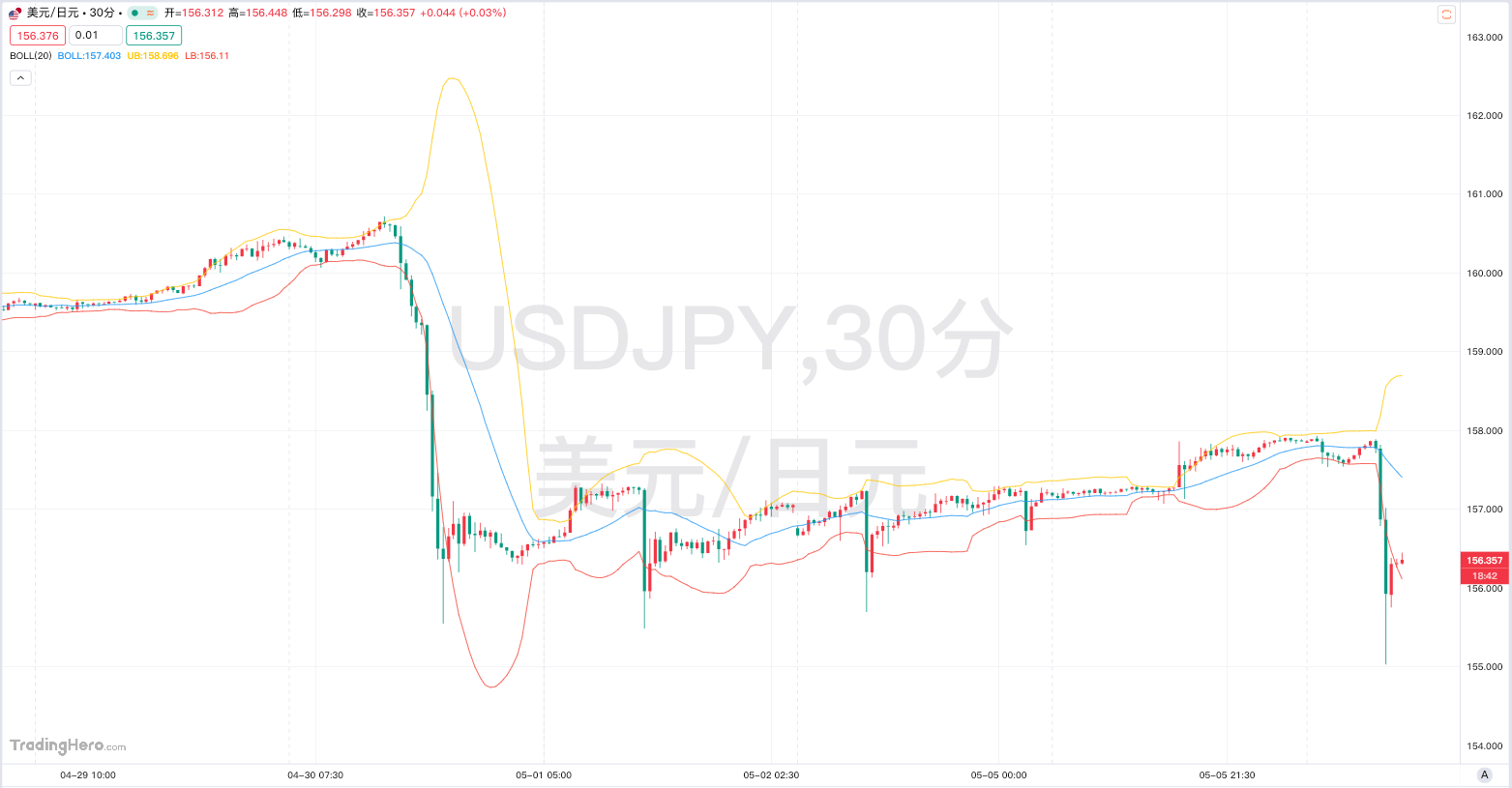
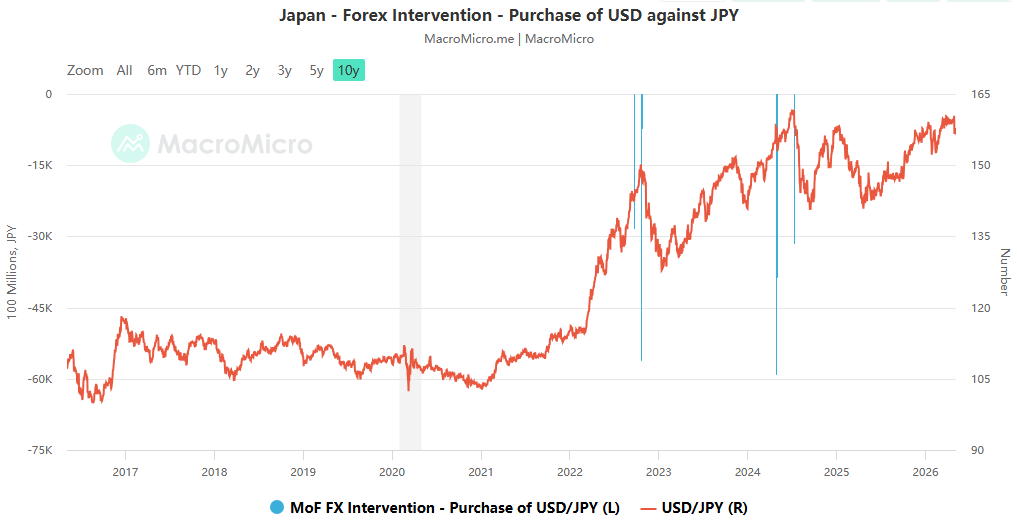
Last week, the yen depreciated to a multi-year low of 160.72, leading the market to widely believe that Japanese authorities intervened on April 30. Bloomberg estimates suggest the intervention amounted to approximately 5.4 trillion yen (US$34.5 billion), comparable to the intervention in 2024. Although Japanese officials have not confirmed any intervention, Satsuki Katayama reiterated on Monday that Japan is "ready to take bold action against currency speculation," continuing the consensus reached in last year's Japan-US exchange rate agreement.
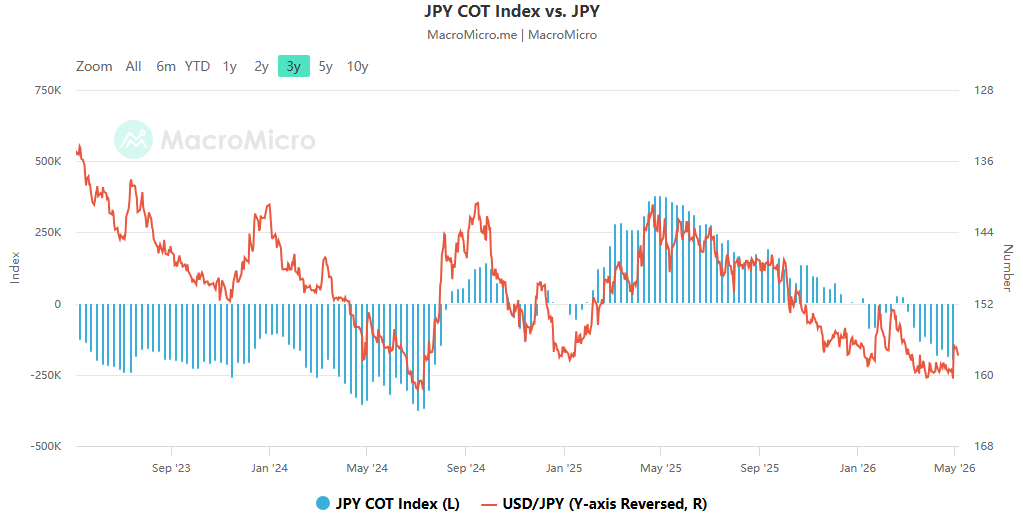
ACE Markets, in conjunction with analyses from Goldman Sachs, TD Securities, and other institutions, believes that the 160 USD/JPY level has become a core policy bottom line for the Japanese Ministry of Finance . Holding this level can effectively deter speculative short sellers of the yen, and a clear shift in market sentiment has already occurred: yen short positions are being actively closed, while options traders are continuously increasing their yen long bets, with short-term speculative long positions reaching their highest level since January. Morgan Stanley and other institutions have also observed a significant increase in yen long positions in the foreign exchange options market since suspected intervention last week.
On Monday during Asian trading hours, the yen briefly surged 0.8% to 155.72 due to thin market liquidity caused by Japan's Golden Week holiday, before giving back most of its gains and stabilizing in a narrow range above 157. ACE Markets forex analysts pointed out that the USD/JPY pair has faced resistance twice above 157, making this level a key point for short-term bullish and bearish battles. The market is highly wary of Japan potentially following the 2024 model, conducting multiple short-term follow-up actions after the initial intervention.
Short-term support and long-term concerns: Intervention is unlikely to change the downward trend in currency prices.
ACE Markets believes the yen will receive two major supports in the short term: first, the persistent expectation of intervention, as Japan has ample foreign exchange reserves (enough to support 30 interventions of the same level based on last week's figures), and the authorities have explicitly stated that "there is no window of opportunity for intervention"; second, rising expectations of a June rate hike by the Bank of Japan, with last week's 6:3 vote in favor of the rate hike further reinforcing market pricing in a June rate hike. However, in the medium to long term, the foundation for a stronger yen remains weak. ACE Markets' in-depth analysis points out that the two core factors leading to the yen's continued depreciation have not changed:
The US-Japan interest rate differential continues to widen : Overseas central banks maintain a hawkish stance due to inflationary pressures, and the expectation of a Fed rate cut continues to be postponed. The US-Japan interest rate differential is unlikely to reverse quickly, and the yen's role as a financing currency for carry trades will continue for a long time.
High energy import costs : The ongoing geopolitical conflict in the Middle East continues to push up oil prices, and as an economy highly dependent on energy imports, Japan's trade balance pressure will continue to weigh on the yen.
Bloomberg's compiled options market data shows that traders currently believe there is about a 52% probability that the yen will fall below the 160 level again by the end of June this year. ACE Markets believes that simple foreign exchange intervention can only smooth exchange rate fluctuations in the short term and cannot reverse the trend. If the Bank of Japan cannot raise interest rates at a pace that matches inflation, the long-term depreciation pressure on the yen will remain.
ACE Markets Outlook
In summary, by clearly defining intervention rules and firmly defending the 160 level, Japanese authorities have successfully stabilized the yen exchange rate in the short term. It is expected that the yen will likely maintain a consolidation pattern within the 155-160 range over the next two months. Investors should pay close attention to three key points: first, whether the Japanese Ministry of Finance will utilize the remaining two intervention windows; second, whether the Bank of Japan's June policy meeting will proceed with the expected interest rate hike; and third, the impact of evolving Middle East geopolitical conflicts on international oil prices. ACE Markets reminds investors that in the current highly uncertain market environment, they should be wary of sharp exchange rate fluctuations triggered by intervention news, while closely monitoring the latest developments in the divergence between US and Japanese monetary policies and rationally managing position risks.



4Can beginners profit effortlessly without even having to understand K-line charts ? Ace Markets shows you how to earn extra cash and bonuses in 3 easy steps !
5新手到高手,Ace Markets交易全攻略
6ACE Markets交易平台:多维度剖析,到底有何独特魅力?
7跟单交易如何有效提高盈利?跟单交易的核心技术及操作方法
8Ace Markets: Creating an excellent trading experience to meet the needs of professional investors
9Ace Markets:卓越交易體驗的背後,是科技與制度的深度融合
10ACE Markets交易平台:加密货币交易平台全解析